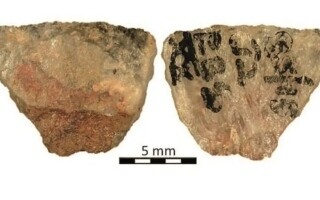
This discovery reflects a cognitive difference between Homo sapiens and early humans like Neanderthals, according to Ludovic Slimak, an archaeologist at France's National Center for Scientific Research and Paul Sabatier University in Toulouse. "This discovery supports the idea that the bow is not a recent invention, but a fundamental and complex technique with roots dating back about 80,000 years in Africa and Asia, which later accompanied Homo sapiens when it arrived in Europe about 54,000 years ago," he explained. The researcher points out that these tools and advanced hunting strategies existed thousands of years earlier than previously believed. "In pursuit hunting, poisoned arrows did not kill the prey instantly, but helped hunters reduce the time and effort needed to track and exhaust the wounded animal," said the study's lead author, Svinn Eixson, a professor of archaeology at the University of Stockholm's archaeological research laboratory. Analysis of the reddish adhesive residue revealed the presence of alkaloids extracted from a poisonous plant. According to the study, these can cause nausea, respiratory paralysis, fluid retention in the lungs, weak pulse, and other symptoms in humans. Before the discovery of poison residue on the "Amhlatozana" arrowheads, the oldest direct evidence of using poison in hunting tools came from bone arrowheads found in Egyptian tombs dating back about 4,000–4,431 years, as well as tools from "Kruger Cave" in South Africa, which are dated to about 6,700 years ago. Archaeologists and geologists use the term "Before Present" as a timescale, with 1950 as the starting point due to the application and adoption of radiocarbon dating. Additional evidence of the use of poisoned hunting tools was found in "Border Cave" in the KwaZulu-Natal region of South Africa, including: The study confirms that the bow and arrow are distinctive technologies used by humans during their spread across the globe. Researchers found two different types of alkaloids—organic plant compounds—in the toxic chemical residues. The poison is then concentrated by heating or exposing it to sunlight. Poisons work in different ways; some, like "myotoxins," destroy muscle tissue, while others called "neurotoxins" attack the nervous system. Hunters avoided parts of the animal affected by "myotoxins," while the effects of "neurotoxins" spread throughout the animal's body, according to Eixson. Eixson also added, "Some poisons are only dangerous when they enter the bloodstream and are not harmful when ingested orally.. Other poisons break down easily with heat, and can therefore be neutralized by cooking." Chemical analysis revealed the presence of "bupanderine" and "epibupandisine" alkaloids on 5 out of 10 quartz arrowheads. Despite being buried for thousands of years, the poison residue remained due to the chemical properties of the alkaloids, which do not dissolve easily in water. Even small amounts of this plant poison can be lethal to rodents within 20 to 30 minutes. Scientists have detected traces of plant poisons on stone-age arrowheads used by hunters in South Africa about 60,000 years ago. According to the authors of the study, published in the journal Science Advances, the discovery represents the oldest known evidence of the use of poisoned arrows. Hunters applied the poison to arrowheads by stabbing the bulbs of the "Boophone disticha" plant or by cutting them and collecting the poisonous substance in a container. Their source was a plant known scientifically as Boophone disticha. Traditional hunters in the region still use this plant today, calling it "Poison Bulb" locally. According to CNN Arabic, it is likely that hunters dipped the quartz arrowheads, found in 1985 in the rock shelter of "Amhlatozana" in the KwaZulu-Natal region of South Africa, in poison before using them to hunt animals. The presence of poisoned arrows at that time suggests that hunters knew the appropriate plants and the duration of the poison's effect before killing their prey. Poisoned arrows are just one example of how our ancestors, who lived during the last ice age, exploited the chemical properties of plants to develop medicines and poisons.