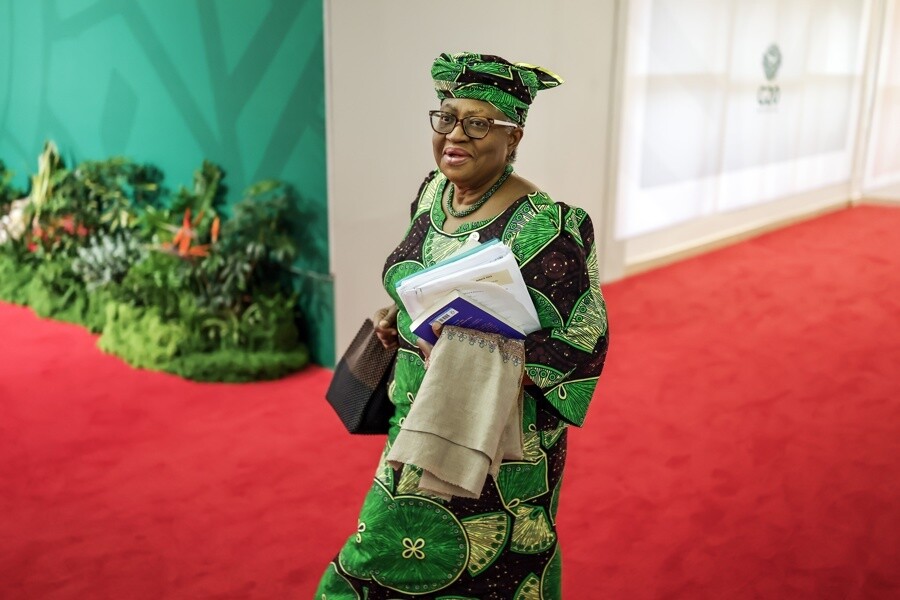
The Director-General of the World Trade Organization (WTO), Ngozi Okonjo-Iweala, warned on Sunday of the global «overdependence» on the United States as a market and on China as a supplier of critical inputs, stating that the international trading system must adapt to strengthen its resilience and reduce vulnerabilities.
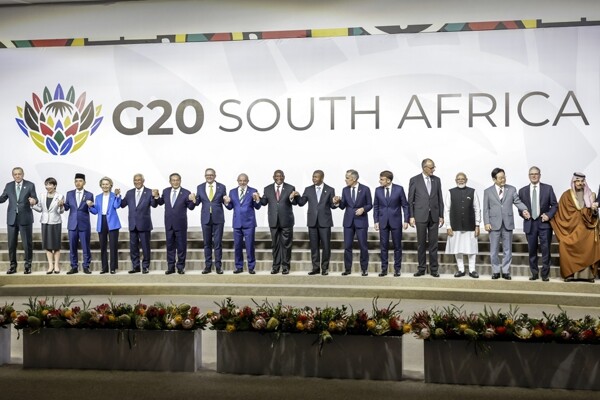
«The world trading system was built for interdependence, not overdependence. In fact, that is what we are discussing right now at the G20 meeting: how we create value chains on the African continent, regionally and sub-regionally, because by doing so we also create jobs for our youth,» she stated.
In this regard, she emphasized that as long as Africa continues to export mainly commodities and raw materials—which, she recalled, account for nearly 60% of its external exports—«things will not change.» Nevertheless, she noted that the African leaders present at the summit «are clearly saying that this has to change, that there must now be added value on the continent.»
«We have 30% of the world's critical minerals on this continent. We need to add value to our products. We can go from raw materials to the final product by creating sub-regional and regional value chains,» she advocated.
She recalled that during the pandemic, it was discovered that the system «was not as resilient due to overdependence on vaccines,» and therefore defended the need to strengthen its resilience through a WTO reform.
«That is why we are promoting trade diversification with the decentralization of supply chains, including in Africa,» Okonjo-Iweala added.
On Saturday, the leaders adopted a declaration advocating for «multilateral cooperation» and including resolutions on climate change, critical minerals, debt sustainability, and a commitment to work for peace in conflicts in accordance with the UN Charter.
In the document, the leaders recognized that producing countries—especially developing countries—face scarce investment, limited local processing capabilities, and socio-environmental challenges. Therefore, it includes the adoption of a framework for critical minerals, defined as a «voluntary and non-binding roadmap» aimed at ensuring that critical mineral resources become a «driver of prosperity and sustainable development».